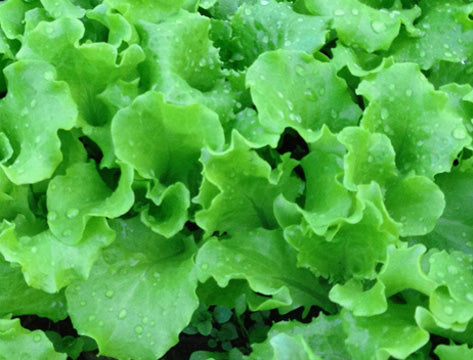
Lettuce prefers cooler weather and will bolt (flower) earlier in hot weather. Sow lettuce seeds outside anytime between March 27th – June 30th. Lettuce seeds germinate when the soil temperature ranges from 35-80° (68° optimum). Lettuce seeds need light to germinate - plant seeds on the surface of the soil and pat gently with a hand. Keep seeds constantly moist until germination (laying row cover fabric on top of the seeds will help keep them cool and moist). Days to germination: 2-14 days. For early head lettuce, start seeds indoors March 1st at 68° (cover flat with a dome and expose seeds to light). Grand Rapids makes great fall/winter lettuce. Sow it around Aug. 15th during a cool spell (lettuce seeds will not germinate if soil temperatures are over 80°) - try covering seeds with row cover fabric to keep them cool and moist. Space 8” apart for head lettuce. Broadcast sow seeds for baby leaf lettuce.
Baby Leaves: for cut-and-come-again, when leaves are 2-4” tall, cut entire plant with scissors 1-2" above the soil so you don’t damage the growing crown. Return for several harvests. Heads: Grand Rapids will make a loose head, harvest at full size before it begins to bolt.
Lettuce is mostly self-pollinated and rarely crosses with other lettuces. Isolation distance: 12’. Minimum population size: 5-10 plants. Remove early bolting plants. If lettuce stems fall over, stake them. Harvest lettuce seeds as they begin to mature (they will form dandelion like white plumes on them). Harvest seeds by tapping stems to shake seeds into a bucket. It is best to harvest lettuce seed after several days of dry weather. Harvest seeds over several weeks.Lettuce is mostly self-pollinated and rarely crosses with other lettuces. Isolation distance: 12’. Minimum population size: 5-10 plants. Remove early bolting plants. If lettuce stems fall over, stake them. Harvest lettuce seeds as they begin to mature (they will form dandelion like white plumes on them). Harvest seeds by tapping stems to shake seeds into a bucket. It is best to harvest lettuce seed after several days of dry weather. Harvest seeds over several weeks.